The goal of AIM is to create a more inclusive environment in pre-schools, so all children, regardless of ability, can benefit from quality early learning and care. The model achieves this by providing universal supports to pre-school settings, and targeted supports, which focus on the needs of the individual child, without requiring a diagnosis of disability.
AIM commenced in 2016, since then, it has helped tens of thousands of children with a disability to access and meaningfully participate in the ECCE (Early Childhood Care and Education) programme in pre-school settings nationwide. The model has been recognised internationally and has won awards for both excellence in practice, and inclusive policy.
Early Childhood Care and Education (ECCE)
The benefits for children of quality early childhood care and education are well documented.
Under the Early Childhood Care and Education (ECCE) Programme, all eligible children in the Republic of Ireland are entitled to free early childhood care and education (otherwise known as ‘free pre-school’) in the period before they start primary school.
With effect from September 2018, there will only be one intake of children in September each year – increasing all children’s participation on the ECCE programme to two full pre-school years
Access and Inclusion Model
In order to support children with a disability to access free pre-school, a major new programme of supports, the Access and Inclusion Mode (AIM), has been introduced.
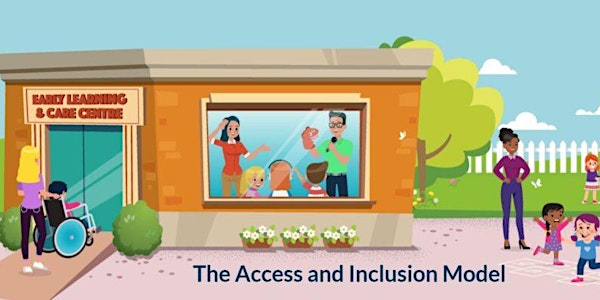
The Access and Inclusion Model (AIM) is a programme of supports designed to ensure that children with disabilities can access the Early Childhood Care and Education Programme in mainstream pre-school settings and can participate fully in the pre-school curriculum alongside their peers
AIM is a child centred model of supports, involving seven levels of progressive support, moving from the universal to the targeted, based on the needs of the child and the pre-school setting. The model is designed to be responsive to the needs of each individual child in the context of their pre-school setting. It will offer tailored, practical supports based on need and will not require a formal diagnosis of disability.
- Levels 1 – 3 of the model involve a suite of universal supports which are designed to promote and support an inclusive culture within pre-school settings by means of a variety of educational and capacity-building initiatives for pre-school providers and practitioners. International evidence suggests that these supports, when appropriately developed, are sufficient to support many children with disabilities.
- However, where a pre-school provider, in partnership with a parent, considers that some further additional support may be necessary to meet the needs of a particular child, they can apply for one or more targeted supports under levels 4 – 7 of the model. Additional targeted supports could take the form of expert early childhood care and education advice and mentoring (level 4), specialised equipment, appliances and minor alterations (level 5), therapeutic supports (level 6) and additional capitation to fund extra assistance in the ECCE pre-school room (level 7). More information on these targeted supports is provided below.
- Finally, AIM applies to all mainstream pre-school settings which are funded through the ECCE Programme. In addition to mainstream settings, pre-school services are also offered in special pre-schools and early intervention classes which cater exclusively for children with disabilities. While the underlying vision of AIM is to cater for as many children as possible in mainstream settings, it is recognised that a small number of children will continue to need specialised services.
Targeted Supports under AIM

A range of targeted supports are available under Levels 4 -7 of the Access and Inclusion Model
Level 4: Expert Educational Advice and Support
Under level 4, pre-school providers can access a national service where specialists in early years care and education for children with disabilities can provide expert advice, mentoring and support. To avail of this support, pre-school providers, in partnership with parents, will be asked to complete an online Access and Inclusion Profile. This will look at the strengths, abilities and needs of the child, as well as the strengths and needs of the pre-school setting. The profile will allow the Early Years Specialist to identify what, if any, additional supports might be required to enable the child’s full participation in pre-school. A copy of the Access and Inclusion Profile can be accessed HERE.
The degree of support offered by Early Years Specialists will depend on the needs of the child and the pre-school provider. In some cases, this may involve developing an Individual Access and Inclusion Plan for the child within their pre-school setting, in conjunction with the parent and the pre-school provider. It may also involve liaising with HSE health and social care professionals to obtain their input and expertise.
Your pre-school provider will have contact details for the Early Years Specialist Service and will contact them.
Level 5: Equipment, Applicance and Minor Alterations
Under level 5, a national scheme is available to provide specialised equipment, appliances or capital grants towards minor building alterations, where these are necessary to support access and to facilitate a child’s participation in pre-school. Applications for this scheme should be made by a pre-school provider, in partnership with a parent. In all cases, a short report from a “designated professional” is required confirming that the specialised equipment or minor building alterations are necessary. Once an application for equipment is approved, this will be sourced by Pobal and delivered directly to the child’s pre-school setting. Training in the use of the equipment will also be provided. Where an application for minor building alterations is approved, a capital grant towards the cost of these alterations will be made available to the pre-school provider.
Level 6: Therapy Services
Information on the different categories of “designated professional” who can complete reports and on the lists of minor alterations and equipment which may be funded under the scheme can be found in the AIM policy document and in the Pobal application and guidance documents, at the following link (Key Documents and Resources).
- A rate of €160 per week to enable a service to supplement their staffing by 10 additional staff hours perweek.
- A rate of €240 per week to enable a service to supplement their staffing by 15 hours per week.