The Importance of the Early Years
There is a very significant body of evidence that the early years matter. Some key points are:

- The portions of the brain that control vision, hearing and language development all start developing at birth and peak before the child reaches 18 months
- Language and literacy skills begin to develop before a child uses its first words; by the age of three, 50% of our language is in place with 85% by the age of five
- Early experiences shape how the brain develops
- Interactions between a child and parent directly affect the architecture of the brain
- Prolonged stress in the absence of protective relationships is damaging to the developing brain and can result in problems in learning and development.
In brief, development in the early years is a key determinant of the child’s future learning capacity, the ability to choose right from wrong, the ability to interact with others, the ability to develop trust and respect for other people. The evidence provides unequivocal support for the economic benefit of investment in early childhood and shows that the benefit accrues not only to the individual child and family, but to all citizens. Early childhood services provide essential support for children’s cognitive, social and emotional development: they also enable parents to participate in the workforce and they provide valuable employment for skilled workers. In addition to these universal benefits, evidence demonstrates that more intensive and targeted early childhood services have the potential to significantly enhance the life chances of more vulnerable children.
In recognition of the above, State investment in early childhood care and education has been a key focus of recent years, and despite economic difficulties, every effort has been made to maintain a high level of investment.
State Investment
Prior to 2000, there was very limited capacity in the childcare sector. However over the decades there has been considerable investment which is growing annually.
Key Milestones in the Evolution of State Investment
- Early 1990s – Initial EU Intervention: Childcare emerged on the policy agenda as European structural and equality funds were used to establish pilot, community-based childcare initiatives
- 2000s – National Development Plans: The first coordinated state funding began with the National Childcare Investment Programme (2006–2010), primarily using capital funding to construct new community and private facilities through The Equal Opportunities Childcare Programme (EOCP) which was a major EU and Exchequer funded initative that ran from 2000 to 2006 to expand and improve Irish childcare infrastructure.
- 2010 – Introduction of ECCE: The state launched the Early Childhood Care and Education (ECCE) Programme. It provided a free pre-school year for all eligible children, later expanding to two free years, representing the first major universal state intervention in early education.
- 2019 – National Childcare Scheme (NCS): The NCS was introduced to replace multiple legacy targeted programs. It provides universal and income-assessed subsidies for parents using registered Early Years, School Age and Childminding services, shifting support directly to families.
- 2022 – Core Funding and Fee Freezes: The Government launched the “Together for Better” funding model. Through the Core Funding scheme, the state pays providers directly in return for freezing parental fees and improving educator pay via Employment Regulation Orders.
- 2024–2026 – Major Expansion and State Provision: State investment hit record highs of over €1.5 billion. In a historic shift, the Department of Children announced a dedicated capital program to directly build, own, and operate state-led childcare facilities in areas of high unmet demand
ECCE (Early Childhood Care and Education)
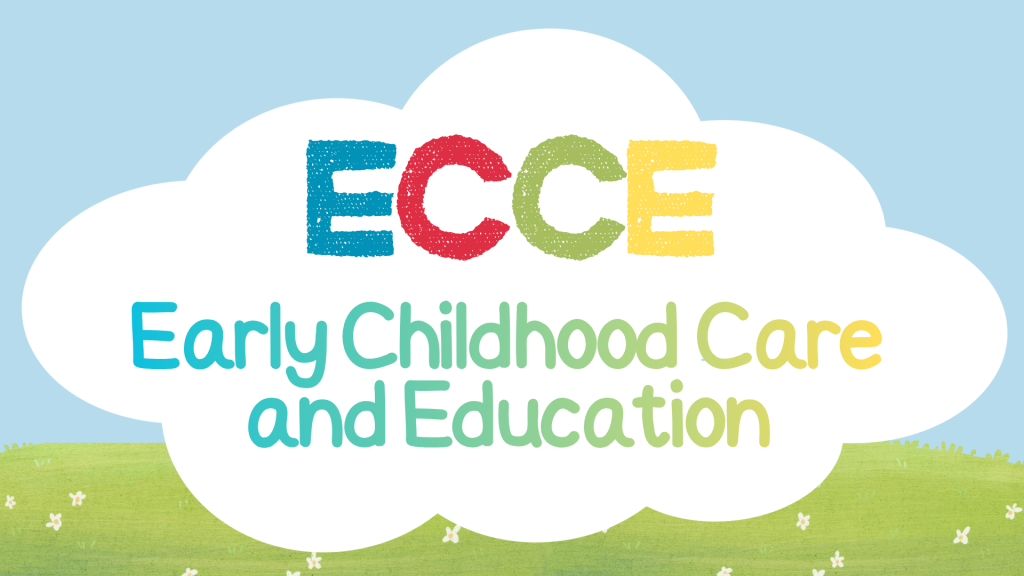
The ECCE programme is designed to give children access to two free pre-school years of appropriate programme-based activities in the year before they start primary school.
Participation in a pre-school programme provides children with their first formal experience of early learning, the starting-point of their educational and social development outside the home. Children who avail of pre-school are more likely to be ready for school and a formal learning and social environment. In general, each eligible child is entitled to two free pre-school years.
NCS (National Childcare Scheme)

The National Childcare Scheme provides subsidies to help parents meet the cost of quality Early Learning and Care and School Age Childcare. It will replace all previous targeted childcare support programmes with a single, streamlined and user friendly Scheme.
Under the National Childcare Scheme, subsidies are available for families with children aged between 24 weeks and 15 years who are attending any participating Tusla registered childcare service, including any Tusla registered childminder and school age childcare services.